
| Dr. Pratiksha Jain
Patients frequently visit our Indiranagar clinic to correct laser hair reduction procedures gone wrong elsewhere. They come in with patchy regrowth, unexpected hair thickening in new areas, or severe hyperpigmentation and burns. These complications usually stem from substandard equipment or a lack of medical training.
The aesthetic market contains many unbranded diode machines and IPL (Intense Pulsed Light) devices sold as advanced lasers. These devices often lack the calibration needed for Indian skin types. For Fitzpatrick Type IV and V skin, common in Bangalore, the epidermis holds a high concentration of melanin. An IPL device produces broad-spectrum light, making it less precise than a true laser. The surrounding skin absorbs the heat meant for the hair root, which can cause thermal injuries, blisters, and dark spots.
The Standard: FDA Clearance
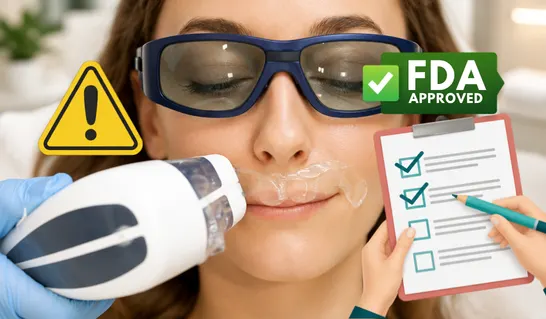
When a medical device earns clearance from the US Food and Drug Administration (FDA), clinical data has demonstrated its safety and effectiveness. At Metphi Clinic, we use FDA-cleared Triple-Wavelength technology that combines Nd:YAG, Diode, and Alexandrite wavelengths into a single pulse.
Basic machines often fail to replicate this multi-depth targeting. They frequently leave residual hair or deliver sub-lethal energy. Low energy can actually stimulate dormant follicles to grow thicker, a condition called paradoxical hypertrichosis.
Medical Supervision
A high-end laser requires a trained physician. Laser settings need precise, dynamic adjustments based on clinical variables. Before a session, a doctor must evaluate:
Settings change over time. As hair becomes finer in later sessions, the fluence (energy) and pulse duration must be adjusted. The doctor must calculate the thermal relaxation time, which is the brief window a follicle absorbs heat before transferring it to the skin.
FDA-cleared systems integrate advanced contact cooling, chilling the epidermis before, during, and after the pulse to prevent burns. Clinics using cheaper machines with faulty cooling often turn down the energy to avoid burning patients, leading to prolonged treatment plans and poor long-term reduction.
Patient Compliance
Laser hair reduction relies entirely on your hair's natural growth cycle. The laser only destroys follicles that are in the active growth phase (anagen). Since only a percentage of your hair is in this phase at any given time, you need multiple sessions to see significant reduction.
The interval between sessions matters as much as the technology:
These specific windows catch the next cohort of follicles entering their active growth phase. Missing appointments or extending the time between sessions disrupts this cycle, prolonging your treatment and reducing its overall effectiveness.
Safety First
Aesthetic treatments are medical procedures that require clinical environments, reliable technology, and experienced physicians. Whether you choose Metphi or another provider, ask to see the FDA credentials of the machine and confirm who is overseeing the procedure and calculating your settings.
Author

Dr Pratiksha Jain (MBBS, PGDCC, PGDM)
Dr Pratiksha has over 9 years of experience in cosmetology and is currently the Medical Head at Metphi Clinic.